Address
304 North Cardinal St.
Dorchester Center, MA 02124
Work Hours
Monday to Friday: 7AM - 7PM
Weekend: 10AM - 5PM

Address
304 North Cardinal St.
Dorchester Center, MA 02124
Work Hours
Monday to Friday: 7AM - 7PM
Weekend: 10AM - 5PM

Explore the Solar System, from the Sun and eight planets to dwarf planets, asteroids, comets and distant icy regions. Discover how our planetary neighbourhood formed and how spacecraft are revealing its worlds.
A star, eight planets, dozens of moons, dwarf planets, asteroids, comets and countless smaller fragments—all bound together by gravity. The Solar System is our home in space, but it is also a dynamic planetary system whose history reaches back billions of years and whose outer frontiers remain only partly explored.
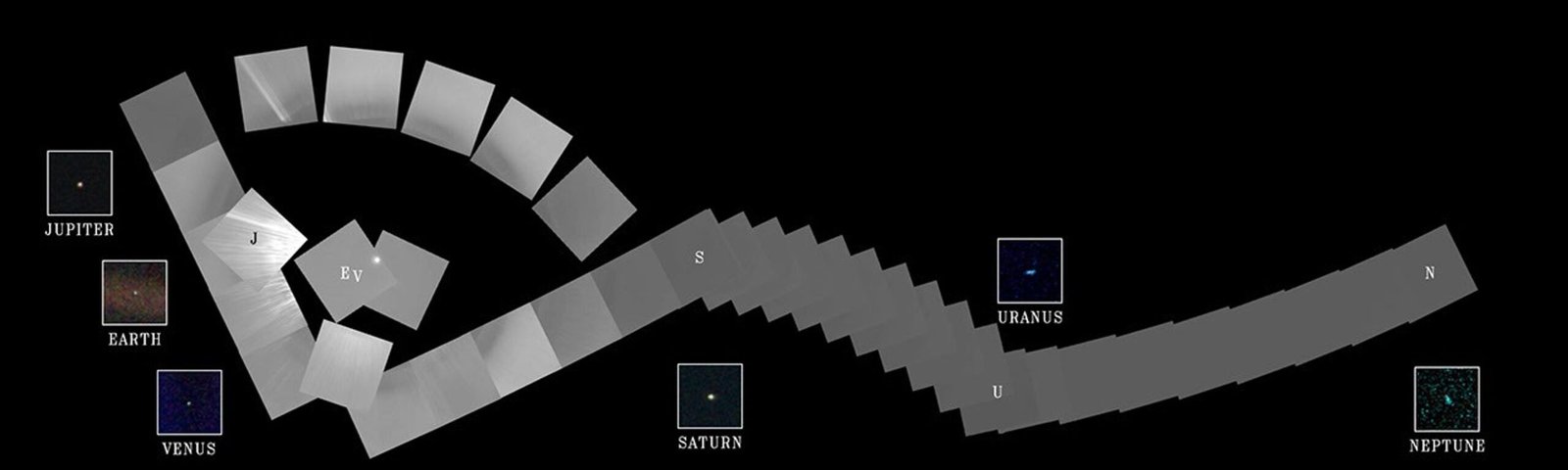
The Solar System is the Sun and all the objects gravitationally bound to it. The Sun contains the overwhelming majority of the system’s mass, so its gravity governs the paths of planets, dwarf planets, asteroids and comets. Those objects, in turn, can have their own moons and smaller companions.
The system is not a flat, fixed diagram. Planets travel on slightly elliptical orbits, moons orbit planets, and smaller bodies follow a wide range of paths. Gravitational interactions continually shape these movements. The Solar System also travels through the Milky Way, orbiting the galaxy’s centre.
The eight planets orbit the Sun at very different distances. Their sizes and separations are not represented to scale.
Our star supplies most of the system’s mass and energy. Its gravity holds the planetary system together, while sunlight drives climates and many processes on planetary surfaces.
Eight planets orbit the Sun. Many have natural satellites, and some moons are complex worlds with atmospheres, ice, oceans or active geology.
Asteroids, comets, meteoroids and other small objects preserve clues about the system’s formation and continue to move through its many regions.
Dwarf planets such as Pluto and Ceres, along with icy bodies in the Kuiper Belt and more distant populations, reveal that the planetary system extends far beyond Neptune.
The Sun is a star—a hot, luminous sphere of plasma powered by nuclear fusion in its core. Under immense pressure and temperature, hydrogen nuclei fuse to form helium, releasing energy that eventually escapes as sunlight and other radiation.
Sunlight warms planets, drives weather and climate on Earth, powers photosynthesis and provides energy that spacecraft can use for solar power. The Sun is also magnetically active. Solar flares and coronal mass ejections can disturb the space environment around Earth and other planets. These effects are studied as space weather in The Sun & Space Weather.
Gravity and energy are different roles. The Sun’s gravity dominates the architecture of planetary orbits; its radiation and magnetic activity shape the environments in which planets and spacecraft exist.
The eight planets occupy distinct orbital zones around the Sun. The four inner planets—Mercury, Venus, Earth and Mars—are small, rocky worlds. Beyond the asteroid belt are the giant planets: Jupiter and Saturn, followed by the ice giants Uranus and Neptune. This broad arrangement reflects the changing temperatures and materials present in the young Solar System.
The distances between planetary orbits increase dramatically across the system. The inner planets travel relatively close to the Sun, while the giant planets occupy much wider orbits. Their gravitational influence also shapes smaller bodies, including asteroid populations, resonant groups and the paths of comets.
Planetary orbits are not perfectly circular or isolated. Their inclinations, eccentricities and gravitational interactions help define the system’s structure. Resonances can stabilise some populations while scattering or redirecting others, and the giant planets have played an important role in shaping the Solar System’s long-term evolution.
Explore the worlds themselves: For detailed profiles of each planet, their interiors, atmospheres, geology and major moons, continue to Planets & Moons. This page focuses on how those worlds fit into the complete planetary system.
Planets are not the only important residents of the Solar System. Smaller bodies preserve material left over from planet formation and help scientists reconstruct the system’s early history.
A dwarf planet orbits the Sun and is massive enough for its gravity to make it nearly round, but it has not cleared its orbital neighbourhood of other debris and is not a moon. Pluto, Ceres, Eris, Haumea and Makemake are recognised dwarf planets.
Asteroids are rocky or metallic small bodies. Many occupy the main asteroid belt between Mars and Jupiter, while others travel on near-Earth orbits or inhabit other regions.
Comets contain substantial ice mixed with dust and rocky material. When they approach the Sun, heating releases gas and dust, creating a coma and often tails that point generally away from the Sun under the influence of sunlight and the solar wind.
A meteoroid is a small natural body in space. The streak of light produced as one enters an atmosphere is a meteor; any surviving fragment that reaches the ground is a meteorite.
The Solar System has distinct populations and regions, but their boundaries are not all sharp physical walls. The asteroid belt lies between Mars and Jupiter. Beyond Neptune, the Kuiper Belt contains many icy bodies, including Pluto. Farther out, the hypothetical Oort Cloud is proposed as a vast, roughly spherical reservoir of icy objects that may supply some long-period comets.
The Solar System extends far beyond the orbit of Neptune. The Oort Cloud remains a theoretical population inferred from comet orbits.
The main asteroid belt is not a crowded wall of rocks. Objects are separated by enormous distances. Jupiter’s gravitational influence helped shape the region and prevented its material from assembling into a planet in the way the terrestrial planets did.
This broad region beyond Neptune contains icy remnants from the Solar System’s formation. Pluto is one of its best-known members. The belt helps scientists study the outer Solar System and the migration history of the giant planets.
The Oort Cloud is a hypothesised distant shell of icy bodies surrounding the Solar System. Its existence is inferred partly from the paths of long-period comets arriving from many directions. No spacecraft has directly imaged the Oort Cloud as a complete population.
The Solar System formed about 4.6 billion years ago from a collapsing region of a cold molecular cloud. As gravity drew material inward, the young Sun formed at the centre while much of the remaining gas and dust flattened into a rotating protoplanetary disc.
A simplified model of formation from a collapsing cloud, through a disc, to growing planetary bodies.
Dust grains collided and stuck together, building larger aggregates. Over time, planetesimals and protoplanets grew through collisions and gravitational attraction. The inner region was hot enough that rocky and metallic materials could condense, while colder outer regions allowed water, ammonia and methane ices to become important building materials.
The giant planets influenced the distribution of smaller bodies through their gravity. Collisions, migration and gravitational scattering helped shape the system we observe today. Some details—especially the timing and paths of giant-planet migration—remain active research topics.
Why this history matters: asteroids and comets are not merely leftovers. They are time capsules that preserve clues about the raw materials and conditions from which planets formed.
Robotic spacecraft have transformed the Solar System from a collection of points of light into a family of diverse worlds. Flybys, orbiters, landers, rovers and sample-return missions each reveal different parts of the story.
Mission plans and schedules can change, but the scientific goals are enduring: understand planetary formation, compare worlds, investigate habitability and learn how our planetary neighbourhood evolved. For the wider human story behind these journeys, explore Space Exploration & Missions.
Earth is the only confirmed inhabited world. Could subsurface oceans on icy moons or ancient environments on Mars have supported life? We do not yet know.
Models suggest the giant planets may have shifted their orbits early in Solar System history. Researchers continue to test how those movements shaped the asteroid and Kuiper belts.
Distant icy objects and unusual orbits may reveal more about the outer Solar System. The proposed Oort Cloud remains largely beyond direct exploration.
Thousands of exoplanets show that planetary systems can be very different from ours. Comparing them helps scientists understand which features of our system are common or unusual.
There are eight recognised planets: Mercury, Venus, Earth, Mars, Jupiter, Saturn, Uranus and Neptune. Pluto is classified as a dwarf planet.
The Sun is the central star and contains most of the Solar System’s mass. The planets orbit it under the influence of its gravity.
Jupiter is the largest planet in the Solar System by both diameter and mass.
Mercury is the closest planet to the Sun. Venus is the hottest planet because of its extremely strong greenhouse effect.
The Solar System formed about 4.6 billion years ago from a collapsing cloud of gas and dust.
There is no single simple edge. The heliosphere, shaped by the solar wind, has a boundary called the heliopause. The Sun’s gravitational influence extends much farther, potentially to the distant Oort Cloud.
It is not a densely packed field of rocks. Objects are widely separated, and spacecraft can travel through the region with careful navigation.
Pluto is classified as a dwarf planet under the International Astronomical Union’s definition. It orbits the Sun and is nearly round, but it has not cleared its orbital neighbourhood.
No. Spacecraft have visited many planets and smaller bodies, but much of the outer Solar System remains only briefly observed or entirely unexplored at close range.
Move from the architecture of the planetary system to the individual worlds, the star that powers it and the missions that reveal its secrets.
For further reading, start with these resources from NASA: