Address
304 North Cardinal St.
Dorchester Center, MA 02124
Work Hours
Monday to Friday: 7AM - 7PM
Weekend: 10AM - 5PM

Address
304 North Cardinal St.
Dorchester Center, MA 02124
Work Hours
Monday to Friday: 7AM - 7PM
Weekend: 10AM - 5PM

Explore what it would take for humanity to become a spacefaring civilization, from sustainable transport, habitats and off-Earth resources to space infrastructure, economics, governance and environmental responsibility.
Reaching space is an extraordinary achievement. Returning safely is another. But becoming a spacefaring civilization would demand something far greater: the ability to live, work, build, maintain infrastructure and sustain human communities beyond our home planet over long periods of time.
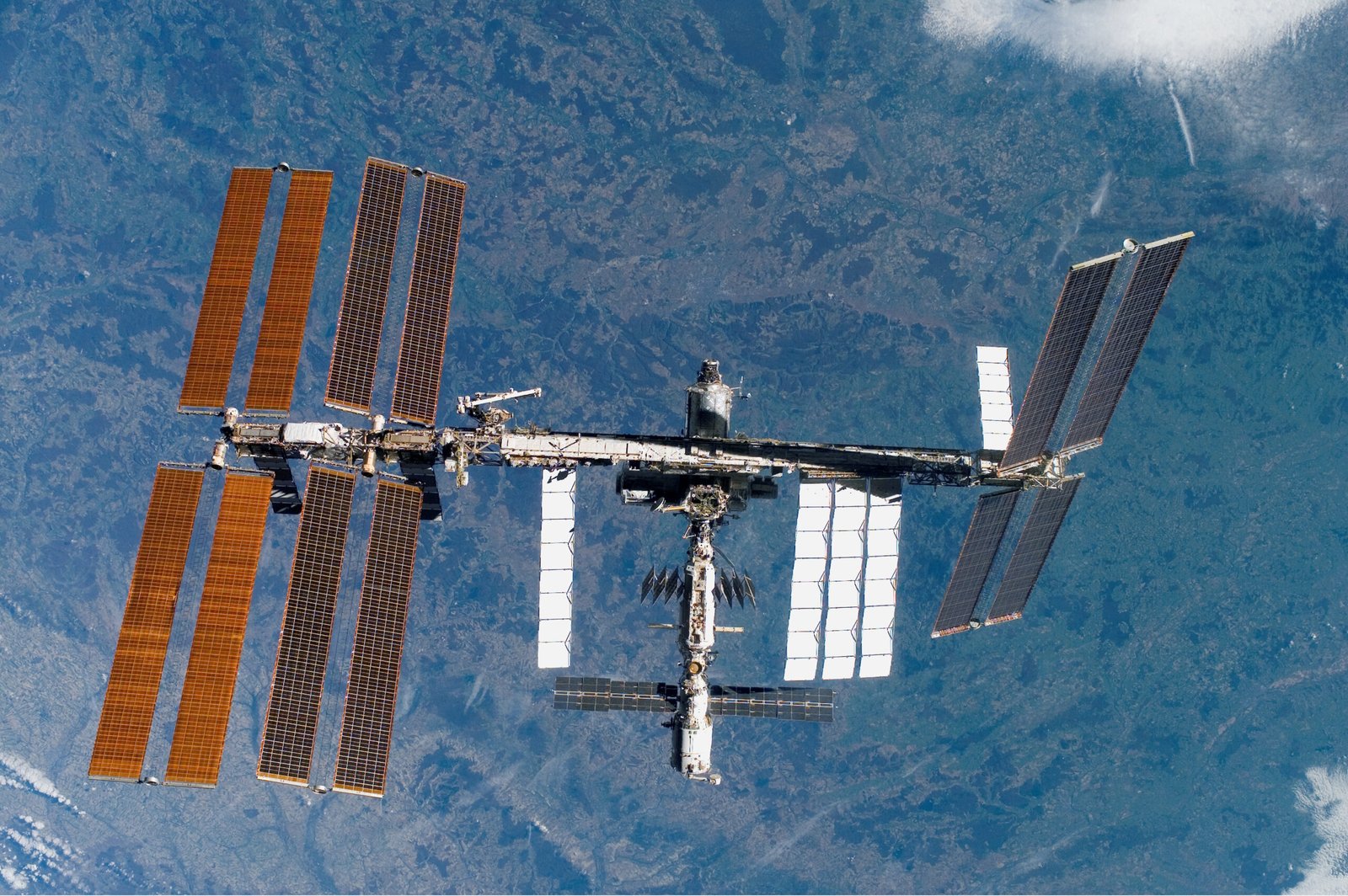
A rocket launch can take us into orbit. A spacecraft can carry astronauts to the Moon. A robotic explorer can investigate a distant world. Yet none of these achievements, on its own, makes humanity a spacefaring civilization.
That transformation would require a connected system of transportation, energy, habitats, resource use, manufacturing, science, governance and cooperation. It would also require us to confront difficult questions about human health, environmental responsibility, economic priorities and the future of life beyond Earth.
There is no universally agreed technical threshold at which a civilization becomes spacefaring. The term describes a gradual expansion of capability rather than a single milestone. A society that launches satellites has entered the space age. A society that can send people to orbit has developed human spaceflight. A society that can maintain permanent, resilient and increasingly self-sufficient communities beyond Earth would have crossed a much more demanding threshold.
Spacefaring does not necessarily mean millions of people living on Mars or travelling between stars. It could begin with dependable access to orbit, long-lived stations, lunar research facilities, robotic industry and regular transportation between destinations. The defining feature is the ability to sustain activity beyond Earth rather than relying only on isolated missions.
There are several motivations for becoming more capable in space. They overlap, but they are not identical—and none should be treated as an automatic justification for every proposed project.
Space-based observatories, planetary exploration and research in microgravity allow us to investigate questions that cannot be answered as effectively from Earth’s surface. Exploring other worlds can reveal how planets form, how life might emerge and how our own planet evolved.
Satellites already support communications, navigation, weather forecasting, disaster response, environmental monitoring and scientific measurement. Improving these systems can deliver direct benefits to people on Earth.
Launch services, satellite manufacturing, data applications, communications, research and emerging in-space services can create industries. But viable markets, real customers and sustainable costs must exist; not every space business model will succeed.
Some argue that expanding human activity beyond Earth could reduce certain civilisation-level risks. This is a long-term possibility, not a near-term guarantee. A settlement dependent on Earth for food, equipment and rescue would not be an independent backup for humanity.
Exploration is part of how societies understand their place in nature. The desire to investigate new environments can motivate science, education and international cooperation.
Looking back from space gives us powerful tools to understand climate, ecosystems, oceans, agriculture and disasters. Greater space capability can strengthen our ability to care for Earth rather than treat it as expendable.
Long-term activity beyond Earth requires several systems to work together. A weakness in one can limit the whole network. A habitat without reliable power cannot support a crew; a mine without transport has little practical value; and a station without maintenance and resupply cannot operate indefinitely.
Launch vehicles, crew spacecraft, cargo vehicles, landers, orbital tugs and transfer systems must move people and equipment safely between destinations.
People need pressure, breathable air, water, food, thermal control, radiation protection, sanitation, medical support and psychologically workable living conditions.
Solar arrays, energy storage and potentially nuclear power systems must provide dependable electricity for habitats, communications, industry and transport.
Networks must connect spacecraft, habitats, surface vehicles and Earth. Navigation and timing services will be essential for safe operations and logistics.
Equipment needs inspection, repair, spare parts and eventually local production. A settlement cannot depend on launching every replacement component from Earth forever.
Communities need rules, safety standards, resource agreements, dispute resolution, accountability and coordination with other nations and organisations.
Most space activity today is organised around missions. A spacecraft is designed, launched, operated for a defined purpose and eventually retired. A spacefaring society would need infrastructure that supports many missions and users over time.
That could include orbital refuelling depots, communications relays, navigation beacons, cargo transfer vehicles, repair facilities, power systems, surface landing areas, habitats and scientific laboratories. Some infrastructure may be shared by governments, universities and commercial operators. Other facilities may be specialised for particular missions.
The transition is not guaranteed to be cheaper or simpler. Infrastructure has to be built, maintained, supplied and governed. It becomes valuable when it enables enough useful activity to justify its cost and risk.
Launching everything from Earth is expensive because every tool, litre of water and kilogram of propellant must first be lifted out of Earth’s gravity well. Using local resources could reduce some transport needs and make longer operations more practical. This idea is known as in-situ resource utilisation, or ISRU.
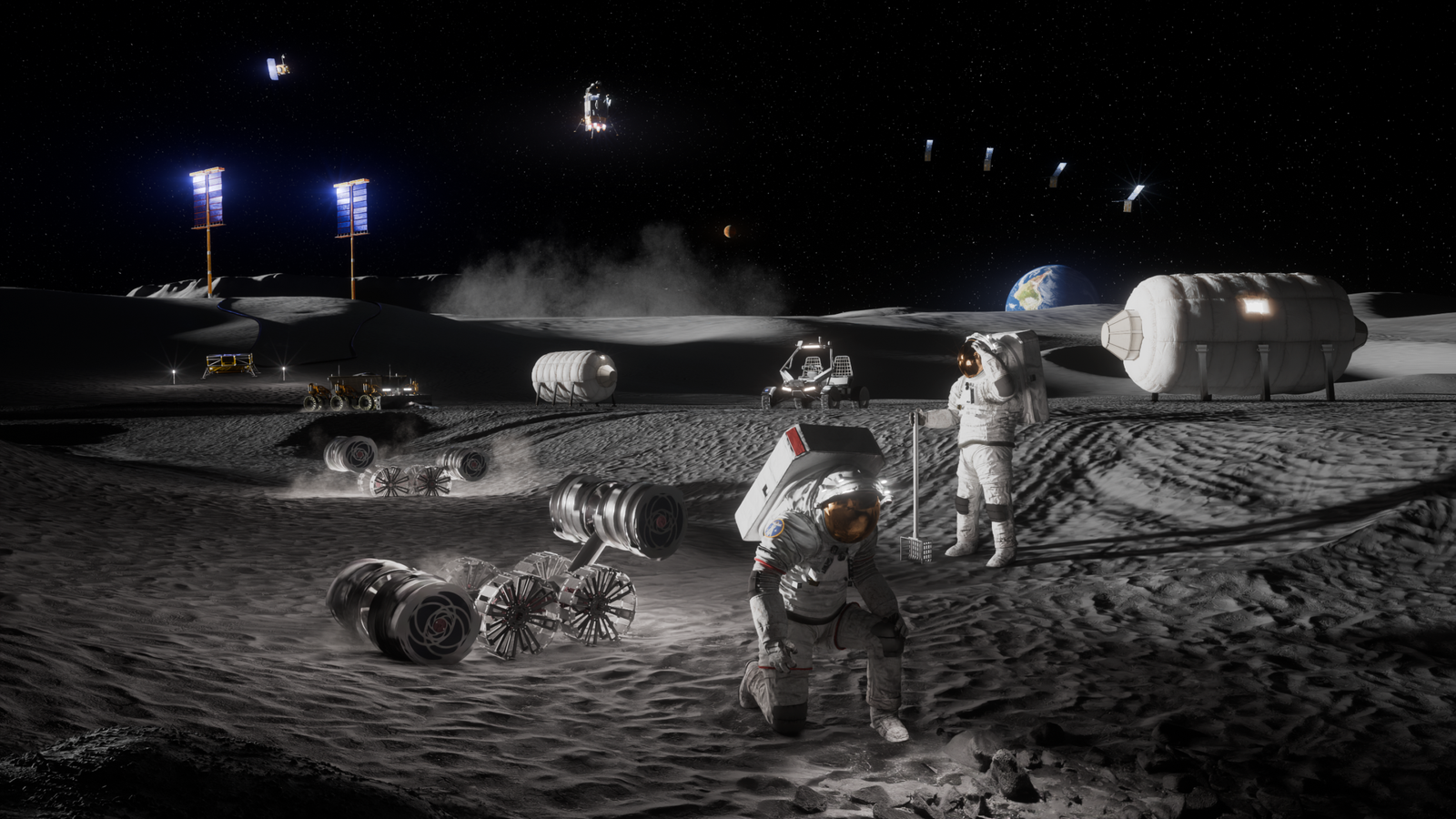
Water ice may exist in permanently shadowed lunar regions. If accessible deposits can be confirmed and extracted, water could support life support and potentially be separated into oxygen and hydrogen. The scale, energy cost and practicality of extraction remain unresolved.
Oxygen is chemically bound in lunar minerals. Experimental processes could extract it for breathing or oxidiser production, but industrial-scale production and reliable equipment have not yet been demonstrated on the Moon.
Mars has a carbon-dioxide-rich atmosphere and water ice in some locations. Proposed systems could use local feedstocks to produce oxygen, water or propellant ingredients, but they require energy, processing equipment and careful verification.
Some asteroids contain metals, silicates or volatile compounds. Their potential use is often discussed, but prospecting, extraction, processing, transport, economics and environmental governance remain major challenges.
A durable space economy would include more than launch companies. It could involve satellite data services, communications, navigation, Earth observation, research, in-space transport, servicing, manufacturing, construction, tourism and resource processing. Different activities will mature at different rates.
Some parts of this economy are already established. Satellite communications, navigation services, Earth-observation data and launch services have real customers. Other areas, such as large-scale orbital manufacturing or commercial lunar resource extraction, remain early-stage or speculative.
A healthy market requires reliable demand, transparent pricing, insurance, safety standards, predictable regulation, access to finance and responsible management of shared orbital environments. Public investment may be necessary for foundational science and infrastructure whose benefits are too broad or too long-term for one company to capture.
Space is not an ungoverned frontier. International agreements, national laws, licensing systems and technical standards already shape how states and companies operate. The 1967 Outer Space Treaty establishes core principles, including that outer space is not subject to national appropriation by sovereignty claims and that states bear international responsibility for national space activities.
As activity expands, governance questions become more complex. Who is responsible if a commercial satellite causes damage? How should operators coordinate to avoid collisions? How should lunar resources be used? What protections should apply to scientifically important sites? How can access be fair while recognising that countries and companies have different capabilities?
Long-term space development will need transparency, coordination, environmental responsibility and mechanisms for resolving disputes. Technology can make new activities possible, but institutions and rules help determine whether those activities remain safe and legitimate.
Earth orbit is a limited and increasingly busy environment. Defunct satellites, spent rocket stages and fragments from collisions can remain in orbit and threaten functioning spacecraft. Even small debris can cause serious damage at orbital velocities.
Responsible operations include tracking objects, sharing orbital information, planning collision avoidance, passivating spacecraft at end of life and disposing of satellites in accordance with applicable guidelines. No single measure removes the problem, and long-term sustainability requires cooperation among operators and governments.
Planetary protection is another responsibility. Spacecraft exploring Mars, icy moons and other potentially habitable environments must be designed and operated to reduce harmful biological contamination. Protecting scientific evidence is part of responsible exploration.
No country can build a spacefaring future through one programme alone. Long-term capability depends on sustained investment, skilled people, dependable institutions, industrial capacity, international relationships and public priorities. These national pathways are different, and they continue to evolve.
The United States combines government-led science and exploration with a large commercial space sector. NASA’s human-spaceflight, science and exploration programmes contribute experience in operating crews beyond low Earth orbit, while commercial providers supply launch, cargo, crew and satellite services. This mix could support a wider network of transport, research facilities and orbital services if the systems become reliable, affordable and sustainable.
A major long-term challenge is turning individual missions and commercial services into infrastructure that can be maintained and used by many customers. The country’s future spacefaring capacity will depend not only on ambitious destinations, but also on dependable logistics, life-support systems, partnerships and continuity across programmes.
Reference: NASA — official programmes and exploration plans.
India’s space programme has developed practical national capabilities in communications, Earth observation, meteorology and navigation, alongside planetary science and launch systems. These services build the institutional, scientific and industrial foundations that any long-term expansion into space would require. They also demonstrate that a country’s spacefaring progress is measured partly by the value its space infrastructure delivers to people on Earth.
Human-spaceflight development, continued launch-vehicle advancement, research institutions and a growing private space sector could broaden India’s future role. The next challenge is to connect these capabilities into durable systems: regular access to orbit, crew and cargo operations, long-duration life support, research infrastructure and partnerships that can be sustained over decades.
References: ISRO — official programmes · ISRO — applications.
Russia’s decades of crewed missions and orbital-station operations have built experience in spacecraft operations, docking, spacewalks, life support and maintaining people in orbit for extended periods. That operational knowledge is relevant to any future society that hopes to keep people working safely beyond Earth.
Its future pathway will depend on how it sustains and renews launch, crew transport, station, navigation and industrial capabilities, as well as how its programmes adapt to changing partnerships and resources. Historical achievements should not be confused with guaranteed future capacity; proposed projects and current operational systems need to be assessed separately.
Reference: Roscosmos.
China has established a crewed space station and pursued a sequence of robotic lunar and planetary missions. These programmes develop experience in sustained orbital operations, autonomous spacecraft, surface exploration, sample return and the coordination of complex national projects. Such capabilities can contribute to a broader long-term presence beyond Earth.
The next stages will depend on the ability to maintain infrastructure, support repeated missions, develop reliable logistics and convert exploration achievements into lasting scientific and operational capacity. As with every national programme, distinguish completed missions from announced goals and proposed schedules.
References: China National Space Administration · China Manned Space Agency.
These examples are not a ranking. A genuinely spacefaring future is likely to involve national programmes, commercial operators, universities and international partnerships—and no single country currently has a fully self-sustaining civilisation beyond Earth.
A permanent outpost is not automatically a self-sustaining settlement. The real test is whether people can remain safe and productive when supplies are delayed, equipment fails or conditions change. Reaching that level would require progress across several connected milestones.
Regular cargo and crew transport would need to become predictable enough to support routine operations. Reusable launch systems may help, but a resilient network would also need safe spacecraft, landing systems, storage, maintenance and contingency options.
Habitats would need to recover and recycle as much water, air and material as practical. Food production, waste processing, medical care and radiation protection would need to work reliably for long periods. Complete independence from Earth is a much harder goal than partial recycling.
Settlements would need the ability to inspect, maintain and repair equipment using a mix of imported components and locally produced materials. This could reduce dependence on Earth, but complex manufacturing and spare-parts supply chains would take substantial development.
Continuous energy would be essential for habitats, communications, resource processing, mobility and scientific work. Power generation must be paired with storage, distribution, maintenance and backup capacity suited to each environment.
Long-term settlements would need education, healthcare, conflict resolution, transparent decision-making, meaningful work and social connection. Engineering a habitat is not the same as creating a healthy community.
Expansion must account for orbital debris, contamination risks, the preservation of scientifically important locations and the effects of extraction or construction. Long-term presence should not come at the cost of destroying the environments we hope to understand.
Progress may move unevenly. Some capabilities could mature in orbit before they are practical on the Moon or Mars. A plausible sequence is the expansion of reliable orbital services, followed by more capable lunar operations, increasingly durable surface infrastructure and, only much later, settlements with substantial local production and resilience.
It is tempting to describe space settlement as an escape from Earth’s problems. That framing overlooks how dependent early off-Earth communities would remain on our planet—and how much responsibility we have for the environments we explore.
For the foreseeable future, settlements beyond Earth would rely on Earth for expertise, equipment, medicine, advanced components, finance and emergency support. Their development should therefore strengthen scientific cooperation and responsible stewardship, not weaken our commitment to the only world currently known to support human life.
Becoming spacefaring would not mean outgrowing Earth. It would mean learning to operate beyond it while recognising the extraordinary conditions that make life here possible.
There is no single official threshold. The term generally describes the ability to sustain complex activity beyond Earth through dependable transport, habitats, energy, logistics, maintenance, institutions and cooperation—not simply the ability to launch spacecraft.
A space station demonstrates important human-spaceflight and orbital-operating capabilities. But a broader spacefaring society would also need reliable supply chains, infrastructure, long-term services and the ability to maintain activity across multiple missions and destinations.
Long-duration lunar habitation is a goal being studied, but it would require reliable power, radiation protection, life support, transport, communications, maintenance and access to supplies. A permanent, resilient settlement has not yet been established.
It would need to recycle water and air, produce some food and useful materials locally, generate dependable power, repair equipment and maintain robust transport and communication links. Reducing dependence is likely to be gradual; complete independence is a far more demanding challenge.
Potential resources include lunar water ice, oxygen bound in lunar minerals and water or carbon dioxide on Mars. Their practical use depends on confirming accessible deposits and demonstrating safe, reliable extraction and processing at useful scale.
Not automatically. Early settlements would remain vulnerable and dependent on Earth. A second location could eventually diversify some risks, but only if it became sufficiently resilient and self-supporting—something humanity has not yet achieved.
Existing international space law, national legislation and agreements provide part of the framework. Permanent communities would raise further questions about jurisdiction, safety, resource use, labour, representation, dispute resolution and environmental protection. These questions require international discussion and clear rules.
That remains uncertain. Some space services already have customers, but a settlement economy would need dependable demand, affordable transport, local production and a wide range of essential services. Technical possibility alone does not guarantee economic viability.
No reliable date can be given. Progress depends on technical breakthroughs, costs, political priorities, international cooperation and the ability to operate infrastructure safely over long periods. Specific timelines should be treated as forecasts, not facts.
Space technology connects the machines that take us beyond Earth with the systems that could eventually support a civilisation working there.
These institutional resources provide further context: