Address
304 North Cardinal St.
Dorchester Center, MA 02124
Work Hours
Monday to Friday: 7AM - 7PM
Weekend: 10AM - 5PM

Address
304 North Cardinal St.
Dorchester Center, MA 02124
Work Hours
Monday to Friday: 7AM - 7PM
Weekend: 10AM - 5PM

Explore humanity's journey into space, from Sputnik and Apollo to Voyager, the International Space Station, Mars rovers and India's missions. Discover how missions work, what they teach us and the challenges of exploring beyond Earth.
Every journey beyond Earth begins with a question: what is out there, and what might we learn by going? From the first artificial satellite to humans walking on the Moon, from robotic explorers crossing the Solar System to observatories looking deep into cosmic history, space exploration has expanded our knowledge—and changed how we see our place in the universe.
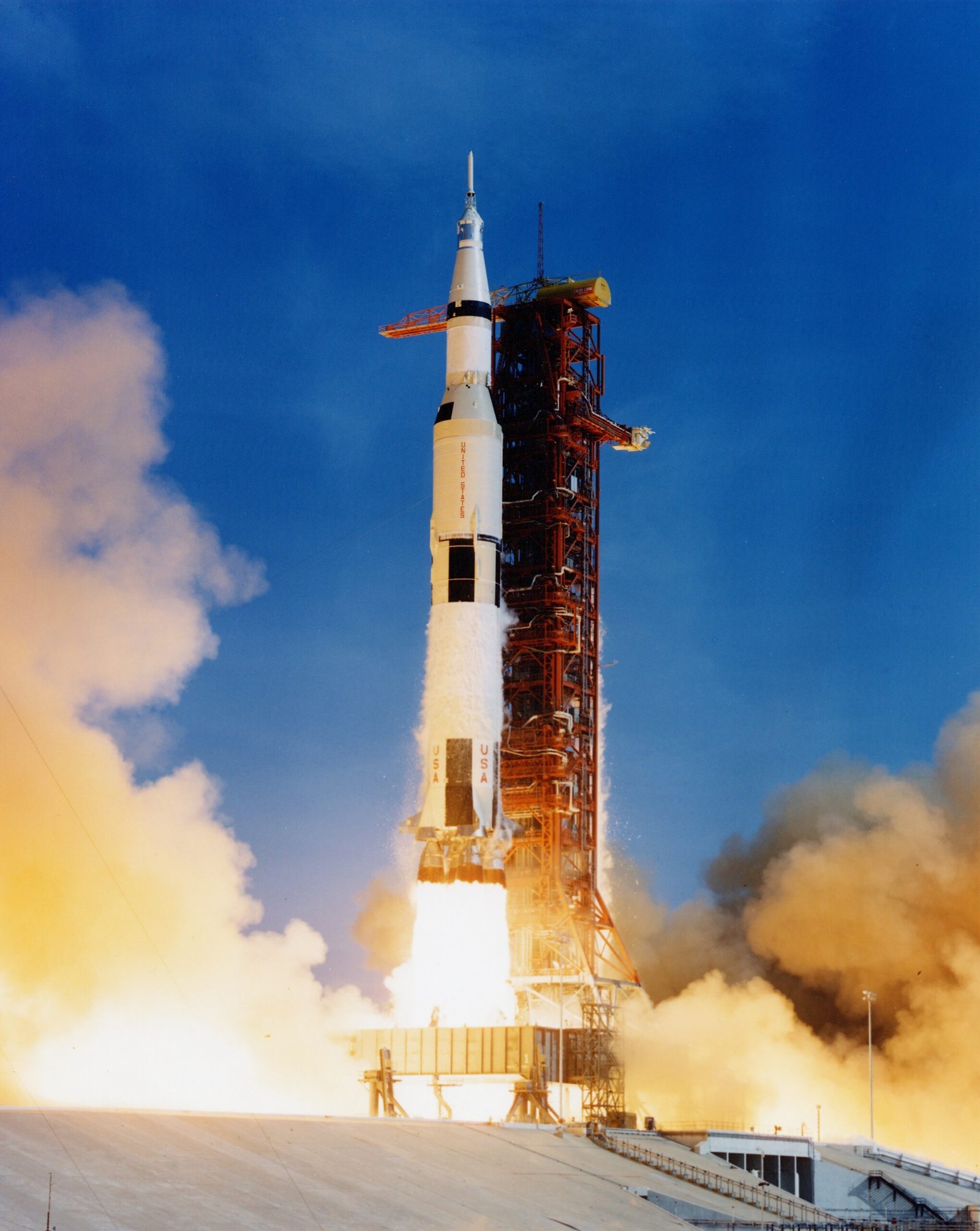
Space exploration is the effort to investigate the universe beyond Earth’s atmosphere using human crews, robotic spacecraft, telescopes, landers, orbiters and scientific instruments. It is not one single activity. Some missions answer questions about planets and moons; others study the Sun, observe distant galaxies, test new technologies or help us understand Earth itself.
Exploration is driven by curiosity, scientific discovery, practical needs and the desire to develop capabilities that may shape the future. It also involves risk, cost, difficult engineering and choices about which questions deserve resources. The strongest missions connect a clear scientific or practical purpose with a realistic plan to reach, operate at and study their destination.
The space age began during the Cold War, when the United States and Soviet Union competed in science, technology and geopolitics. Their early achievements established the foundations of satellite communications, human spaceflight, planetary exploration and international cooperation.
A few milestones from the first decades of space exploration to the era of large space observatories and long-duration human presence in orbit.
The Soviet Union placed Sputnik 1, the first artificial satellite, into orbit. Its radio signals demonstrated that an object built by humans could circle Earth and marked the beginning of the space age.
Soviet cosmonaut Yuri Gagarin became the first human to travel into space and orbit Earth aboard Vostok 1. The flight showed that human spaceflight was possible.
NASA’s Apollo 11 mission achieved the first crewed landing on the Moon. Neil Armstrong and Buzz Aldrin explored the lunar surface while Michael Collins remained in lunar orbit.
Viking landers investigated Mars, Pioneer and Voyager spacecraft explored the outer Solar System, and missions to Venus and other destinations broadened planetary science.
Hubble began observing from orbit, avoiding much of Earth’s atmospheric distortion and opening decades of discoveries about planets, stars, galaxies and cosmic expansion.
Modules for the ISS began entering orbit in 1998. The station became a long-running international laboratory for research in microgravity and a platform for human spaceflight operations.
Human spaceflight is among the most visible parts of exploration, but it is also one of the most demanding. Crews need life support, radiation protection, reliable power, navigation, communications, medical planning and systems that can be maintained far from Earth.
The first crewed programmes tested whether people could survive launch, weightlessness, orbital flight and re-entry. They established basic human-spaceflight procedures and experience.
These programmes developed capabilities needed for longer missions, including spacewalks, rendezvous and docking. Such techniques were essential for later lunar missions and orbital operations.
NASA’s Apollo programme sent astronauts to the Moon between 1969 and 1972. Six missions landed crews on the lunar surface, returning samples and observations that transformed lunar science.
NASA’s reusable orbiter carried crews and payloads to orbit from 1981 to 2011. Shuttle missions deployed and serviced satellites, supported science and helped assemble the International Space Station.
The ISS supports long-duration research in biology, physics, materials science, Earth observation and human health. Its continuous crewed presence has helped develop the operational experience needed for future exploration.
Commercial spacecraft now transport astronauts to and from low Earth orbit under government contracts. This model adds new providers and operational approaches to human spaceflight.
Human exploration is not a substitute for robotic exploration. People can make flexible decisions and perform complex work, while robots can travel to environments too distant, dangerous or hostile for crews. The two approaches often complement one another.
Robotic spacecraft have visited every major class of planet in our Solar System, studied small bodies, landed on worlds and travelled beyond the planets. They can operate for years or decades, carrying instruments designed for specific scientific questions.
Orbiters circle a planet, moon or other body to map its surface, atmosphere, magnetic field or gravity. Repeated observations reveal seasonal changes and global patterns that a brief flyby could miss.
Landers descend to a surface and make measurements from one location. They can analyse soil, atmosphere, seismic activity and local geology, but their view is geographically limited.
Rovers move across a surface, allowing scientists to examine rocks and landscapes at multiple locations. Mars rovers have transformed our understanding of the planet’s ancient environments.
Flyby spacecraft pass a target at high speed, collecting images and measurements during a limited encounter. They can visit multiple destinations without entering orbit around each one.
These missions collect material and deliver it to Earth for detailed laboratory analysis. Samples can be studied with instruments too large or complex to send on a spacecraft.
Telescopes in space observe the universe across wavelengths that are partly or wholly blocked by Earth’s atmosphere. They study everything from nearby planets to the earliest galaxies.
Some missions become milestones because they reach a new destination; others because they return extraordinary data, test a new capability or change the questions scientists ask.
Launched in 1977, the Voyager spacecraft conducted landmark encounters with the giant planets and their moons. Voyager 1 later crossed the heliopause, entering interstellar space. Both spacecraft continue to send back limited scientific data as their power declines.
Since 1990, Hubble has delivered observations that helped refine estimates of the universe’s expansion rate, revealed planetary atmospheres and captured galaxies across cosmic time. It is a major example of a mission whose scientific life extended far beyond its initial deployment.
The NASA–ESA–ASI mission explored Saturn, its rings and moons from 2004 to 2017. The Huygens probe descended through Titan’s atmosphere and reached its surface, while Cassini revealed Enceladus’s active plumes and Saturn’s complex system.
After its 2015 flyby of Pluto, New Horizons revealed a complex icy world with mountains, plains and an active geological history. It later flew past the Kuiper Belt object Arrokoth in 2019.
ESA’s Rosetta mission studied comet 67P/Churyumov–Gerasimenko for more than two years. Its Philae lander made the first successful landing on a comet nucleus, although the landing was not in the intended orientation or location.
NASA’s Perseverance rover landed in Jezero Crater in 2021 to study ancient environments and collect samples for possible future return. Its companion Ingenuity helicopter demonstrated powered, controlled flight on another planet.
India’s space programme has developed from early sounding-rocket experiments into a broad national capability spanning launch vehicles, satellites, planetary science, solar observation and human-spaceflight preparation. Its missions have contributed to science, communications, navigation, weather forecasting and Earth observation.
India’s first satellite, Aryabhata, was launched by the Soviet Union. It marked an important early step in India’s satellite programme and space-science ambitions.
India’s first lunar mission orbited the Moon and contributed to evidence for water-related molecules on the lunar surface. It established a foundation for later lunar exploration.
The Mars Orbiter Mission entered Mars orbit in 2014. It demonstrated India’s ability to undertake an interplanetary mission and studied the planet’s surface and atmosphere.
India’s multi-wavelength space observatory studies celestial sources across ultraviolet and X-ray bands, supporting research in high-energy astrophysics.
India achieved a successful soft landing near the Moon’s south polar region. The Vikram lander and Pragyan rover conducted surface experiments, making India the fourth country to achieve a lunar soft landing.
India’s first dedicated solar observatory was placed in a halo orbit around the Sun–Earth L1 region. It studies the solar atmosphere, solar wind and space-weather processes.
India’s achievements belong within the wider history of global space exploration. Mission success should be described precisely: reaching orbit, entering another world’s orbit, landing, operating on the surface and returning samples are different levels of achievement.
A mission is more than a launch. It is a coordinated chain of decisions and operations, beginning with a scientific or practical objective and continuing through design, testing, launch, navigation, communication, data analysis and—where possible—end-of-mission planning.
A mission’s operations continue after launch. Navigation updates, instrument calibration, communication windows and analysis are essential to turning a spacecraft into scientific results.
Space missions are designed to answer questions beyond Earth, but many also produce benefits closer to home. Satellites support weather forecasting, disaster response, navigation, communications, climate monitoring and agriculture. Space-based observations provide a global view of processes that are difficult to measure from the ground alone.
Research in microgravity helps scientists investigate fluids, combustion, materials and biological systems under unusual conditions. Engineering for space can also advance sensors, robotics, power systems, computing, communications and autonomous operations. These benefits do not mean every space project automatically produces a useful commercial spin-off; outcomes depend on the technology and how it is applied.
Space missions require long development timelines, specialised teams and expensive infrastructure. Agencies must weigh scientific value, public benefit, risk and opportunity cost.
Beyond Earth’s protective environment, crews face radiation, isolation, altered gravity and medical risks. Longer journeys make these challenges more difficult to manage.
Defunct satellites, spent rocket stages and fragments can threaten spacecraft in orbit. Responsible mission design includes tracking, collision avoidance and end-of-life disposal plans.
Spacecraft should be designed and operated to reduce harmful biological contamination of other worlds and avoid bringing potentially hazardous extraterrestrial material back without appropriate safeguards.
Large missions often involve shared expertise, facilities, instruments and data. Cooperation can spread cost and capability, but it also requires clear agreements and coordination.
Exploration must consider orbital congestion, radio-frequency coordination, environmental impacts on celestial bodies and the preservation of scientifically valuable sites.
Exploration is entering a period in which lunar activity, commercial launch services, robotic sample return, planetary defence and more capable observatories are reshaping mission plans. Future human missions may build on experience from low Earth orbit and robotic lunar exploration, while robotic spacecraft continue to reach destinations that crews cannot yet visit.
The next era will not be defined by one destination alone. It will depend on whether exploration can become more capable, sustainable and scientifically productive—while maintaining careful standards for safety, evidence and international responsibility.
Sputnik 1, launched by the Soviet Union on 4 October 1957, was the first artificial satellite to orbit Earth and is widely regarded as the beginning of the space age.
Yuri Gagarin, a Soviet cosmonaut, became the first human in space on 12 April 1961 aboard Vostok 1, completing one orbit of Earth.
Apollo missions achieved six crewed lunar landings between 1969 and 1972: Apollo 11, 12, 14, 15, 16 and 17.
Robots can travel to distant, hazardous or extreme environments without life-support systems. They can be designed for long missions and carry specialised instruments. Human crews, however, can adapt and perform complex tasks in ways robots may not.
A flyby passes a target, an orbiter enters a path around it, and a lander descends to its surface. Each mission type provides different opportunities and constraints for observation.
India’s Mars Orbiter Mission, also known as Mangalyaan, launched in 2013 and entered Mars orbit in September 2014.
The ISS remains an important research and operations platform for microgravity science, human health studies, technology testing and international cooperation. Its future is subject to programme plans and operational decisions.
There is no single biggest challenge. Distance, radiation, communication delay, propulsion, life support, power, reliability and cost all become more demanding as missions travel farther from Earth.
Exploration depends on the vehicles we build, the technologies we develop and the systems that keep people alive beyond Earth. Continue through the Humanity in Space pillar.
The Apollo 11 launch photograph used on this page is credited to NASA / Kennedy Space Center (KSC-69PC-442). It is identified as a public-domain U.S. government work in the source record. NASA imagery is generally available for factual, informational use, but individual assets must still be checked for third-party rights, privacy/publicity issues and restrictions on implying NASA endorsement. NASA insignia and logos are not included as decorative branding.
For future mission photographs, use the original agency or archive record, verify the individual asset’s rights, preserve the supplied credit and retain the source URL in the WordPress media description. ISRO material may be reproduced under its published copyright policy when it belongs to DOS/ISRO, is accurately represented and prominently acknowledged; third-party material on ISRO pages is excluded from that permission.
Reference policies: NASA Images and Media Usage Guidelines · ISRO Copyright Policy.
For further reading, start with these resources from NASA: