Address
304 North Cardinal St.
Dorchester Center, MA 02124
Work Hours
Monday to Friday: 7AM - 7PM
Weekend: 10AM - 5PM

Address
304 North Cardinal St.
Dorchester Center, MA 02124
Work Hours
Monday to Friday: 7AM - 7PM
Weekend: 10AM - 5PM

Explore the future of space travel, from reusable rockets, orbital refuelling and advanced propulsion to lunar infrastructure, human missions to Mars and the ambitions of the United States, India, Russia and China.
The next era of space travel will not be defined by a single destination or a single spectacular rocket. It will be shaped by a network of capabilities: reusable launch vehicles, spacecraft that can refuel in orbit, lunar transport, long-duration habitats, autonomous robots and propulsion systems that make distant journeys more practical.
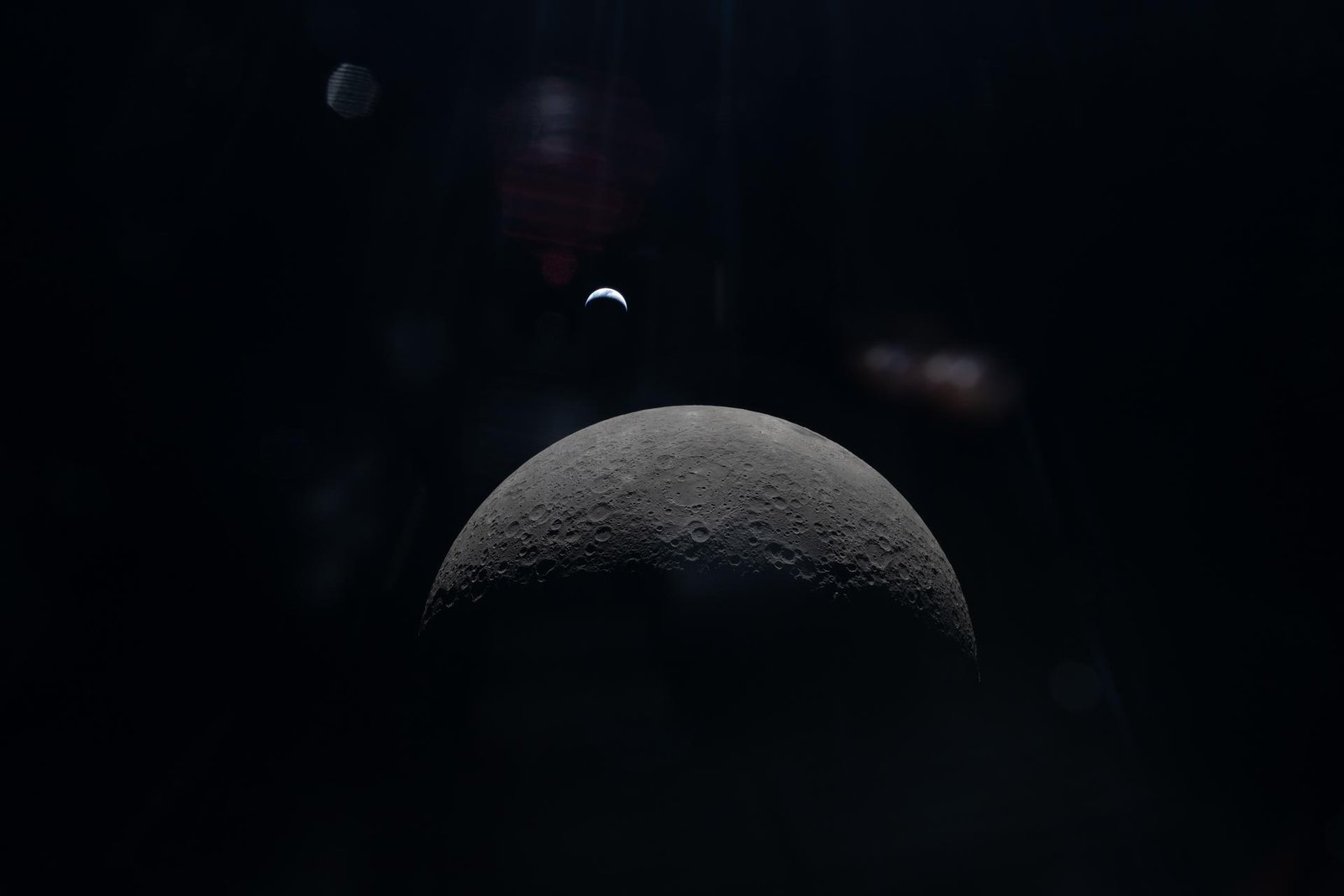
For most of human history, space was something we observed from the ground. Then we learned to send machines into orbit, people to the Moon and robotic explorers across the Solar System. The next challenge is harder: turning occasional journeys into a more sustained, reliable and diverse human presence beyond Earth.
Some pieces of that future already exist. Others are being tested. Many remain concepts. Understanding the difference is essential when asking where space travel is really heading.
Early spaceflight was organised around difficult, expensive missions: build a rocket, launch a spacecraft, complete a specific objective and return—or send a probe that may never come back. Future exploration aims to make more of the journey reusable and repeatable.
That does not mean space travel will become as simple as booking an airline ticket. Launches will remain technically demanding, and destinations impose severe environmental and logistical constraints. But a transportation architecture can reduce the need to build every mission from scratch. It may combine launch vehicles, orbital depots, transfer stages, reusable landers, surface habitats and robotic cargo systems.
The Moon is the nearest world where humans can learn to operate beyond Earth for extended periods. It is close enough for comparatively short journeys, yet far enough to expose the limitations of life support, surface mobility, power, communications and logistics.
Future lunar missions will depend on a sequence of transport capabilities: reliable crew and cargo landers, vehicles that can move people and equipment across the surface, navigation and communications systems, and the ability to deliver supplies on a repeatable schedule. Robotic cargo missions are likely to prepare routes and test equipment before crews undertake more complex journeys.
Vehicles must deliver people, scientific instruments and supplies safely to the lunar surface, then support the return or transfer stages required by each mission architecture.
Pressurised and unpressurised rovers could extend the distance crews and instruments can travel from a landing site. Range, terrain, power, communications and emergency recovery all shape their usefulness.
Uncrewed landers and robotic systems can deliver equipment, map routes and test operating conditions before astronauts arrive. Their reliability is essential to reducing mission risk.
Precise landing guidance, surface positioning and dependable links with Earth or lunar-orbit relays help crews coordinate movement, science and emergency procedures.
Mars is a compelling destination because it preserves evidence of ancient environments that may once have been habitable. Robotic missions have already transformed our understanding of its geology, climate and water history. Sending humans would add the ability to conduct flexible field science and operate complex equipment, but it would also introduce a much greater level of risk.
A crewed Mars expedition would involve months of travel each way, a long surface stay in many mission designs and a demanding return journey. Communication delays can range from several minutes to more than twenty minutes one way, depending on the planets’ positions. Crews cannot depend on real-time instructions from Earth.
Deep-space radiation exposure, microgravity during transit, partial gravity on Mars and medical emergencies far from Earth all require countermeasures that remain under study.
Mars has an atmosphere, but it is thin. Landing large payloads safely is difficult; technologies demonstrated with robotic rovers do not automatically scale to crew habitats and ascent vehicles.
A crew needs reliable power, oxygen, water, food, thermal control, spare parts and waste management. Systems must work through dust, cold and long periods without resupply.
A mission must plan how the crew leaves Mars. Producing propellant from local resources is a possible strategy, but it requires equipment, feedstock, energy and reliable production before the crew depends on it.
Launch cost affects nearly every space ambition. Reusable boosters can reduce the need to manufacture a new first stage for every flight, while higher launch rates can spread fixed costs across more missions. But recovery, inspection, refurbishment, propellant, range operations and insurance still cost money.
The future may include reusable first stages, fully reusable launch systems, new upper-stage designs and small launchers serving specialised payloads. Different approaches will compete on reliability, price, payload capacity, turnaround time and environmental impact. Reusability is a tool—not a guarantee of cheap or sustainable access.
Another important development is launch diversity. Government agencies, established aerospace companies and newer commercial firms may provide different services. A more diverse market can create options, but it also requires safety oversight, responsible debris practices and transparent performance claims.
Today, many spacecraft carry nearly all the propellant they will need from launch. That limits payload and mission flexibility. If vehicles can dock and transfer propellant in orbit, a spacecraft might launch in pieces, refuel in Earth orbit and then depart for the Moon or another destination.
Orbital refuelling is not a single technology. It requires compatible connections, fluid transfer in microgravity, thermal management, leak prevention, storage over time and reliable docking. Cryogenic propellants are particularly challenging because they can boil off unless kept cold.
In-space assembly could also allow large structures to be built from modules or components launched separately. Telescopes, stations, solar-power systems and deep-space vehicles might become too large or complex to launch as one integrated object. Robotic assembly and maintenance would be important enabling capabilities.
Different missions need different propulsion. A powerful chemical rocket is well suited to launching from Earth because it produces high thrust. A spacecraft travelling for months may benefit from an engine that uses propellant more efficiently, even if its thrust is low.
Improved combustion, materials, manufacturing and engine reuse can increase performance and reliability. Chemical propulsion is likely to remain central to launch and many crewed manoeuvres for the foreseeable future.
Ion and Hall-effect thrusters accelerate charged particles using electrical power. They provide low thrust over long periods and are already used on spacecraft, particularly for station-keeping and some deep-space missions. They are not suitable for lifting off Earth.
A reactor heats a propellant, which expands through a nozzle. It could offer higher performance than conventional chemical propulsion for some missions, but requires major development, testing, safety analysis and policy decisions.
A nuclear power source generates electricity for high-efficiency electric thrusters. This could support long-duration cargo or deep-space missions, but power systems, heat rejection and reactor engineering are substantial challenges.
Large reflective sails use the tiny pressure of sunlight to accelerate without carrying conventional propellant for that thrust. Acceleration is very small, so sails are better suited to carefully designed long-duration missions than rapid crew transport.
Fusion propulsion and antimatter-based propulsion are often discussed for ambitious future interplanetary or interstellar travel. Practical engines face enormous unresolved problems in energy production, containment, materials, scale and safety. They are not operational transport technologies.
In the future, transportation may involve specialised vehicles for different parts of a journey. A launch vehicle could carry cargo to Earth orbit; a reusable tug could move it to a staging point; a transfer vehicle could take it to lunar orbit; and a lander could deliver it to the surface. Crewed and uncrewed systems might use different routes.
Such a network could make exploration more flexible, but it would also create dependencies. A failure in a depot, tug, docking system or surface supply chain could affect many missions. The architecture must be robust enough to handle delays, repairs and changing demand.
Robotic spacecraft are likely to remain the first explorers of the outer Solar System. They can operate for years, tolerate conditions that would challenge human crews and carry specialised instruments. Future missions may explore icy moons, return samples from distant bodies, study the atmospheres of giant planets and investigate the boundary between the Solar System and interstellar space.
Human missions to asteroids or the outer planets are far more difficult. Travel times, radiation, communication delays, power and life support become increasingly demanding with distance. For the foreseeable future, many of these destinations are more realistic for robotic exploration than crewed expeditions.
Interstellar travel is an even greater leap. The nearest stars are many light-years away. Even a spacecraft travelling far faster than today’s probes would take decades or centuries to reach them. Concepts such as laser-driven light sails have been studied for tiny uncrewed probes, but they are not a near-term path to human starships.
Space travel will not be shaped by one country alone. The United States, India, Russia and China have different programmes and ambitions, while Europe, Japan, Canada and other partners contribute important technologies, science and mission capabilities. The landscape includes cooperation, competition and commercial activity.
NASA’s Artemis programme is building a pathway for crewed lunar exploration using Orion, the Space Launch System, commercial lunar landers, spacesuits and partner contributions. Artemis II completed its crewed lunar flyby in April 2026. In an update published on 4 November 2026, NASA described Artemis III as a 2027 low-Earth-orbit demonstration to test lunar-lander operations and Artemis IV as the targeted 2028 crewed lunar landing mission. These are programme targets, not guaranteed dates; architecture, hardware readiness and schedules can change.
Commercial companies are developing launch vehicles, crew and cargo spacecraft, lunar landers and other infrastructure. The long-term objective is to develop capabilities that could support sustained lunar activity and eventually human missions to Mars. That future depends on technical demonstrations, budgets, safety and a stable mission architecture.
References: NASA — Artemis programme · NASA — Exploration Systems Development.
India’s Space Vision 2047 sets out a long-term roadmap that includes Gaganyaan, the Bharatiya Antariksh Station, next-generation launch vehicles, lunar sample return and a planned Indian crewed lunar mission by 2040. The government has stated a target to establish the full Bharatiya Antariksh Station by 2035, with its first module targeted earlier. These are national goals and programme milestones, not completed capabilities.
Chandrayaan-4 is intended to demonstrate technologies for lunar landing, ascent, docking and sample return. The Next Generation Launch Vehicle is intended to expand India’s launch capability. Reusable launch technologies are also part of the broader development landscape. Each project has technical and schedule risks, and the roadmap will evolve as missions progress.
References: ISRO Annual Report 2025–26 — Space Vision 2047 · ISRO — Gaganyaan FAQ.
Russia’s future human-spaceflight plans include continuing crewed transport and orbital operations, developing a proposed Russian Orbital Station and maintaining launch-vehicle capabilities. The station concept is intended to succeed or complement Russia’s role in the ISS era, but its architecture, schedule, funding and international context remain subject to change.
Russia also has a long history of lunar and planetary exploration and continues to discuss future robotic missions. Its future role in deep-space exploration will depend on technical progress, budgets, partnerships and the operational status of existing infrastructure. Announced concepts should not be treated as deployed systems.
Reference: Roscosmos — official programme information.
China has stated a goal of landing astronauts on the Moon before 2030. In November 2026, Chinese officials publicly outlined a more detailed sequence: an early-2027 uncrewed test of Long March 10A and the Mengzhou spacecraft in low Earth orbit; a planned 2028 uncrewed test of Long March 10 and the Lanyue lunar lander, including lunar descent and ascent; and later uncrewed rendezvous and docking rehearsals before a crewed attempt. These are announced development targets, not completed milestones, and the mission remains under development.
China’s Tiangong station provides an existing platform for sustained crewed operations in low Earth orbit. Its robotic exploration plans include lunar sample return, planetary missions and further exploration of the Solar System. The country is also developing new launch and spacecraft systems to support its broader exploration goals.
References: China Manned Space Agency · Space.com — reported 2026 lunar mission sequence.
Private companies increasingly develop launch vehicles, satellite platforms, crew transport, lunar landers, communications networks and in-space services. Governments remain important customers, regulators and funders of high-risk science and exploration, but commercial providers may deliver some services more flexibly or at different cost structures.
Commercial participation does not mean every project will succeed. New vehicles can face delays, test failures, financing pressure and uncertain demand. A healthy space economy needs transparent safety standards, independent oversight, sustainable business models and responsible management of orbital environments.
Deep-space programmes span many years. Funding changes, national priorities and political transitions can alter schedules or cancel projects.
Human missions require dependable launch, life support, landing, abort, navigation and return systems. A chain is only as strong as its weakest critical element.
More launches and satellites increase the need for collision avoidance, responsible disposal and international coordination.
Exploration must consider contamination of other worlds, protection of scientifically valuable environments, resource governance and the rights and responsibilities of future space communities.
Commercial human spaceflight has already made space accessible to a small number of private passengers, researchers and sponsored participants. But access remains expensive, limited and highly specialised. Wider participation depends on launch costs, safety, medical requirements, training, insurance, regulation and the availability of destinations.
It is possible that more people will travel to orbit or visit commercial stations in the future. It is not inevitable that space tourism will become affordable for most people, and routine travel between planets is a much more distant prospect. The economics and safety case must be demonstrated rather than assumed.
| Horizon | What may develop | How to interpret it |
|---|---|---|
| Near term | More commercial launch services, lunar robotic missions, station operations, in-space demonstrations and continued human exploration. | Many systems are operating or in active development, but schedules can move. |
| Next decades | More sustained lunar logistics, improved reusable launch systems, orbital servicing, possible new stations and expanded surface infrastructure. | Dependent on funding, technical validation, mission demand and international cooperation. |
| Longer term | Human Mars expeditions, large-scale in-space construction, advanced propulsion and more extensive off-Earth resource use. | Ambitious goals with substantial unresolved engineering, health, economic and governance questions. |
| Speculative frontier | Fusion-powered spacecraft, antimatter propulsion, interstellar probes and human journeys to other stars. | Research concepts or theoretical possibilities, not operational transport systems. |
The future of space travel is not simply about planting flags farther away. It is about building the knowledge and infrastructure to explore responsibly, conduct science, protect crews, use resources carefully and cooperate across generations.
We may one day see people working on the Moon, cargo moving between orbital depots and robotic explorers travelling to the icy moons of the outer Solar System. Some of these visions may take decades; others may change as new discoveries reshape our priorities. The most important progress will come from turning bold ideas into tested, dependable systems—one difficult engineering problem at a time.
The Moon is a major focus of current crewed exploration programmes. The United States and its partners are developing Artemis missions, China is developing a crewed lunar landing programme, and India has longer-term plans for a crewed lunar mission. Schedules and architectures can change.
No crewed Mars landing date is guaranteed. Several agencies and companies study the technologies required, but radiation, long-duration life support, landing heavy cargo, surface operations and return capability remain major challenges.
Some launch systems are already reusing major components, especially first-stage boosters. Fully reusable systems are being developed and tested, but their cost, reliability and operational benefits must be demonstrated at scale.
Reusable hardware, higher launch rates and commercial competition may reduce some costs. But launch operations, safety, refurbishment, insurance, infrastructure and spacecraft development remain expensive.
Nuclear thermal and nuclear electric propulsion could offer advantages for some missions, but neither is an operational crew transportation system today. Reactor design, testing, safety and mission integration remain substantial challenges.
India’s Space Vision 2047 includes a goal of an Indian crewed lunar landing by 2040. Gaganyaan, the planned Bharatiya Antariksh Station and precursor technologies are intended to build capabilities toward that longer-term ambition.
China has stated a goal of landing astronauts on the Moon before 2030 and is developing the launch vehicle, crew spacecraft and lunar lander for that mission. The landing has not yet occurred.
Interstellar travel is far beyond current human spaceflight capability. Tiny uncrewed probe concepts using light sails have been studied, but the energy, speed, communication, shielding and mission-duration challenges are immense.
Long-term habitats are a possibility being studied, but permanent settlements would require reliable life support, radiation protection, power, food, water, medical care, maintenance, transport and sustainable governance. These systems are not yet in place.
Future journeys depend on the vehicles that carry us, the technologies that keep them working and the human systems that make life beyond Earth possible.