Address
304 North Cardinal St.
Dorchester Center, MA 02124
Work Hours
Monday to Friday: 7AM - 7PM
Weekend: 10AM - 5PM

Address
304 North Cardinal St.
Dorchester Center, MA 02124
Work Hours
Monday to Friday: 7AM - 7PM
Weekend: 10AM - 5PM

Explore black holes, neutron stars, pulsars and magnetars. Discover event horizons, extreme gravity, compact-object mergers, gravitational waves and the unanswered questions at the limits of physics.
Some objects compress more mass into less space than anything else in the universe. Black holes bend spacetime so intensely that an event horizon forms; neutron stars pack stellar material into a sphere only a city across. Together, these extreme objects reveal how gravity, matter and the laws of physics behave under extraordinary conditions.
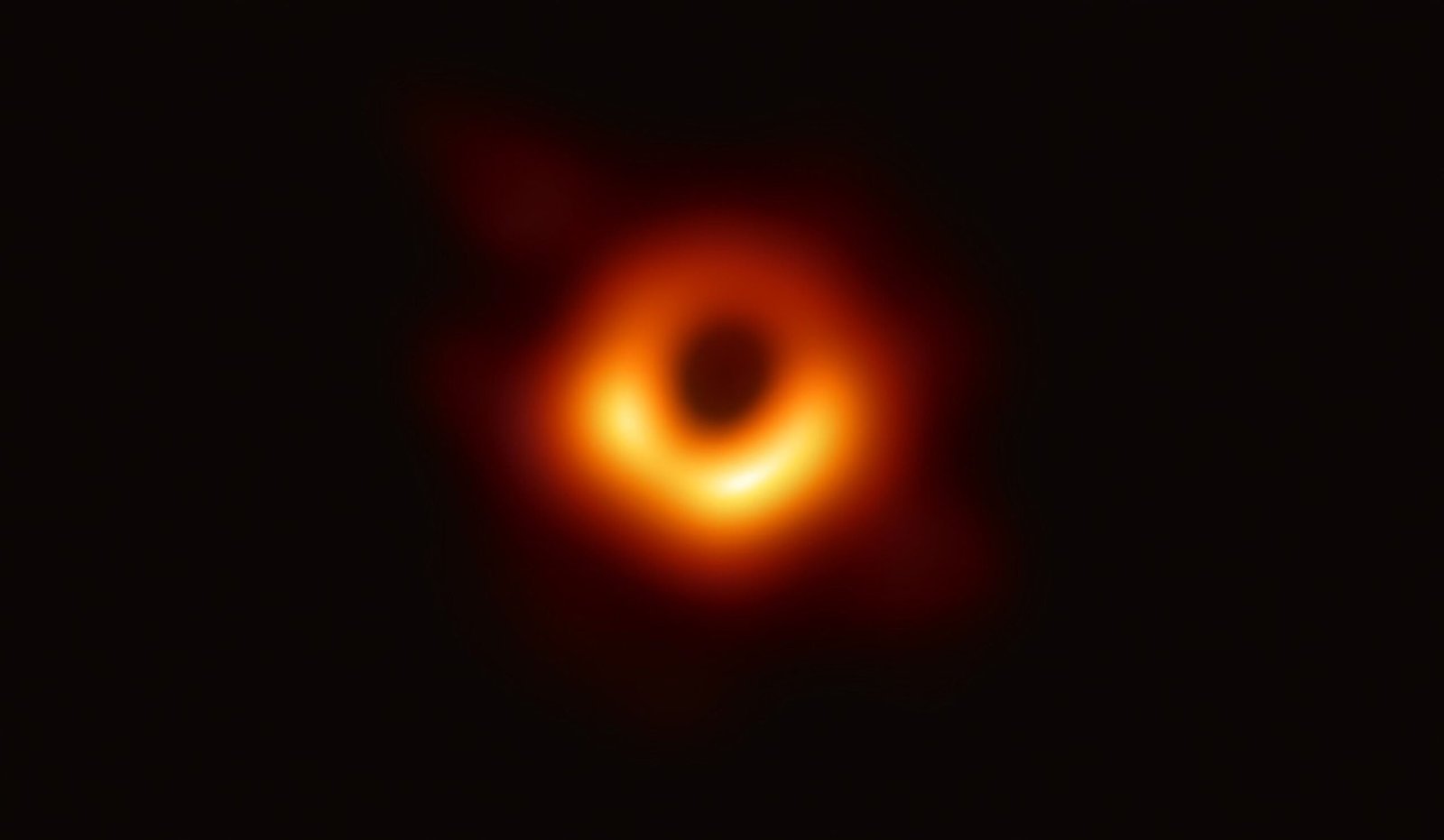
In astronomy, an extreme object is not simply large or bright. It pushes matter, gravity, magnetic fields or energy to conditions that are difficult or impossible to reproduce on Earth. A black hole is defined by a boundary beyond which escape to the outside universe is impossible. A neutron star is a compact stellar remnant whose matter is supported against further collapse by quantum physics and nuclear interactions.
These objects are connected to the lives and deaths of stars, but they are not interchangeable. Their structure, formation pathways and observable signals are different. Studying them helps scientists test gravity, investigate matter at nuclear densities and detect violent events across the cosmos.
Conceptual illustration, not to scale. The apparent glow around a black hole represents hot surrounding material, not light escaping from inside its event horizon.
A black hole forms when enough mass becomes concentrated within a sufficiently small region. Its gravity curves spacetime so strongly that a boundary called the event horizon forms. Once something crosses that boundary, no known path can carry it back to the distant universe—not even a beam of light.
The event horizon is not a solid shell. It is a boundary in spacetime, and a distant observer cannot receive signals sent from inside it. The size of a simple, non-rotating black hole’s event horizon is described by its Schwarzschild radius. Real astrophysical black holes are expected to rotate, so their spacetime geometry is more complicated.
These form through the collapse of the cores of some massive stars. Their masses are typically several to many times the Sun’s mass. The exact outcome depends on the star’s core, mass loss and collapse physics; not every massive star produces a black hole.
These are expected to occupy the gap between stellar-mass and supermassive black holes. Candidates and evidence are developing, but their formation pathways and population remain active research questions.
With millions or billions of solar masses, these reside in the centres of many large galaxies. How their earliest seeds formed and grew so quickly is still being investigated.
Some theories propose that black holes could have formed from unusually dense regions in the early universe. No primordial black hole population has been confirmed.
No. At a given distance, a black hole’s gravitational pull behaves like that of any other object with the same mass. If the Sun were somehow replaced by a black hole of exactly the same mass, Earth’s orbit would not suddenly collapse inward—although Earth would lose sunlight. The danger comes from getting extremely close, where tidal forces and the event horizon matter.
Black holes are detected through their effects on their surroundings. Gas spiralling towards one can form a hot accretion disc and emit intense radiation. A black hole can also influence the motion of nearby stars, bend background light through gravitational lensing, or produce gravitational waves when it merges with another compact object.
The black hole itself is dark in this illustration. Radiation comes from hot matter outside the event horizon; powerful jets, when present, are launched from the region around the black hole and its magnetic fields.
The Event Horizon Telescope produced the first image of a black hole’s shadow in the galaxy M87, released in 2019, and later imaged the supermassive black hole at the centre of the Milky Way. These images show a dark central shadow against emission from hot plasma around the black hole—not a photograph of the event horizon as a physical surface.
Hawking radiation is a theoretical prediction that black holes can emit extremely faint radiation due to quantum effects near the horizon. It has not been detected from an astrophysical black hole. This distinction between prediction and observation is essential to understanding what science currently knows.
When the core of a massive star collapses but does not form a black hole, it can leave behind a neutron star. A typical neutron star contains more mass than the Sun compressed into a sphere roughly the size of a city. Its matter is so dense that a small amount would have an enormous mass on Earth.
Neutron stars are supported by a combination of neutron degeneracy pressure and the strong nuclear interaction. Their interiors are difficult to reproduce in laboratories, and scientists are still working to determine how matter behaves at these densities. The relationship between a neutron star’s mass and radius is a key clue to its internal composition.
A pulsar is a rotating neutron star whose beams of radiation sweep across our line of sight, producing regular pulses. Some rotate hundreds of times per second. Their precise timing makes them remarkable natural laboratories for gravity and dense matter.
Magnetars are neutron stars with exceptionally powerful magnetic fields. Changes in their magnetic field and crust can produce intense bursts of X-rays and gamma rays. Pulsar and magnetar labels describe properties that can overlap.
In 2017, astronomers detected gravitational waves from a collision between two neutron stars, alongside light observed by telescopes. This event connected gravitational-wave astronomy with the production of heavy elements and showed how multiple kinds of observation can reveal one cosmic event.
White dwarfs are the compact remnants left by many stars, including our Sun, after their outer layers are shed. They are supported mainly by electron degeneracy pressure. They are less dense than neutron stars, but still pack stellar mass into a body roughly comparable in size to Earth. Explore their place in the life cycle of stars.
Gamma-ray bursts are brief, extraordinarily energetic flashes of gamma rays. Some are associated with the collapse of massive stars; others arise from compact-object mergers. They are events, not a separate class of compact object.
If a star passes too close to a supermassive black hole, tidal forces can tear it apart. Some of its material may form a luminous accretion flow, creating a flare that astronomers can observe across the electromagnetic spectrum.
Pairs of black holes or neutron stars can spiral together and merge, releasing energy as gravitational waves. Neutron-star mergers can also eject neutron-rich material that helps forge some heavy elements.
When massive objects accelerate asymmetrically—especially during the final orbits and merger of compact binaries—they disturb spacetime and send gravitational waves outward. Instruments such as LIGO and Virgo measure extraordinarily tiny changes in distance as these waves pass Earth.
The first direct detection, announced in 2016 from a signal observed in 2015, came from two merging black holes. Since then, gravitational-wave observations have opened a new way to study black holes and neutron stars, including systems that may be difficult to observe with ordinary telescopes.
These discoveries connect this topic to gravity and relativity, because gravitational waves are a prediction of Einstein’s general theory of relativity.
Extreme objects are not evidence that physics has failed. They are places where our best theories are tested most severely—and where observations can reveal exactly what those theories still need to explain.
Nothing that has crossed the event horizon can send a signal back to the outside universe under our current understanding of spacetime. Radiation observed from a black-hole system is produced by matter outside the horizon, not by light escaping from inside it.
Not literal holes or tunnels. They are regions of spacetime where gravity is so strong that an event horizon forms. Their geometry is described by solutions to Einstein’s equations.
No. Black holes do not roam around vacuuming up everything. Their influence depends on mass and distance, just like gravity from other objects.
A neutron star has a physical surface and is supported by the physics of ultra-dense matter. A black hole has an event horizon and no known stable material surface inside it.
They are both neutron stars. Pulsar refers to detectable beams that sweep past us; magnetar refers to an exceptionally strong magnetic field. Their properties can overlap.
No. Hawking radiation remains a theoretical prediction and has not been observed from an astrophysical black hole.
No. The remnant depends on the star’s core and its evolution. Some massive stars leave neutron stars; others may form black holes, while details depend on complex stellar and collapse physics.
They carry information about the masses, spins and motion of merging compact objects. By measuring their signals, detectors can study systems that may be faint or invisible in ordinary light.
Black holes and compact remnants sit at the intersection of stellar evolution, gravity and the large-scale structure of the cosmos. Follow these connected subjects to see how the pieces fit together.
For further reading, start with these resources from NASA: